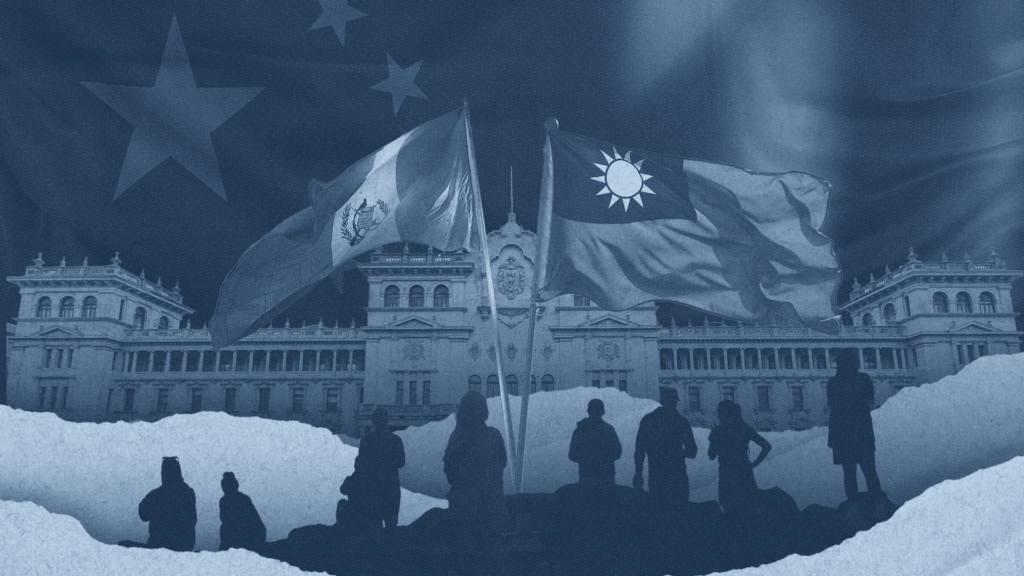
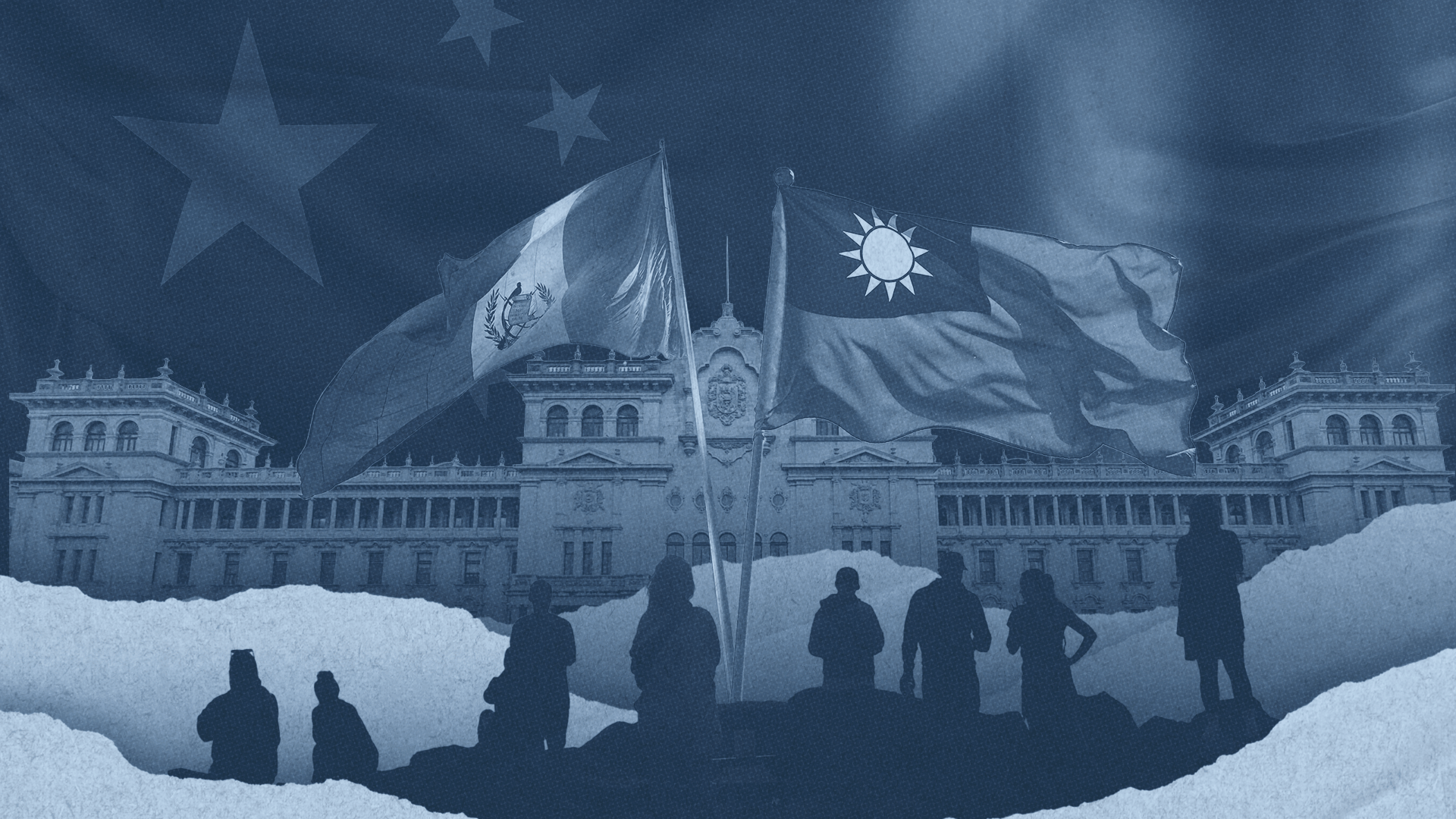
Guatemala, Beijing, and Taiwan: three players, two governments claiming legitimacy, and a single diplomatic relationship. Drawing on an original study, this report examines what Guatemalans imagine about one of the region’s most unusual geopolitical arrangements. Can the average Guatemalan tell the People’s Republic of China from the Republic of China? In the end, the triangle looks a lot like an old Facebook relationship status: “It’s complicated.”
A study by Lucía Escobar and José Enrique Martínez
When Andrea Martínez applied for the scholarship that took her across the Pacific, she knew only two things: it was far away, and people there spoke Chinese. On the flight, when a flight attendant asked whether she preferred a “continental or Asian breakfast,” she chose the second to start getting used to it. They served her “a little broth with watery rice,” a far cry from the eggs and beans any Guatemalan wakes up to. She stayed hungry.
At her destination, she found a cosmopolitan and safe city. For someone born in Guatemala, walking freely around Taipei at any hour of the night changed how she understood everyday life.
Yet the vast majority of Guatemalans will never have Andrea’s experience. They will not study in the Republic of China or visit an Asian country. The average Guatemalan’s picture of those places will be assembled from social media posts, food, products, and news. Many will hold that picture firmly even though they have never spoken to a Chinese or Taiwanese person. The paradox becomes sharper when one looks at the region’s political map.
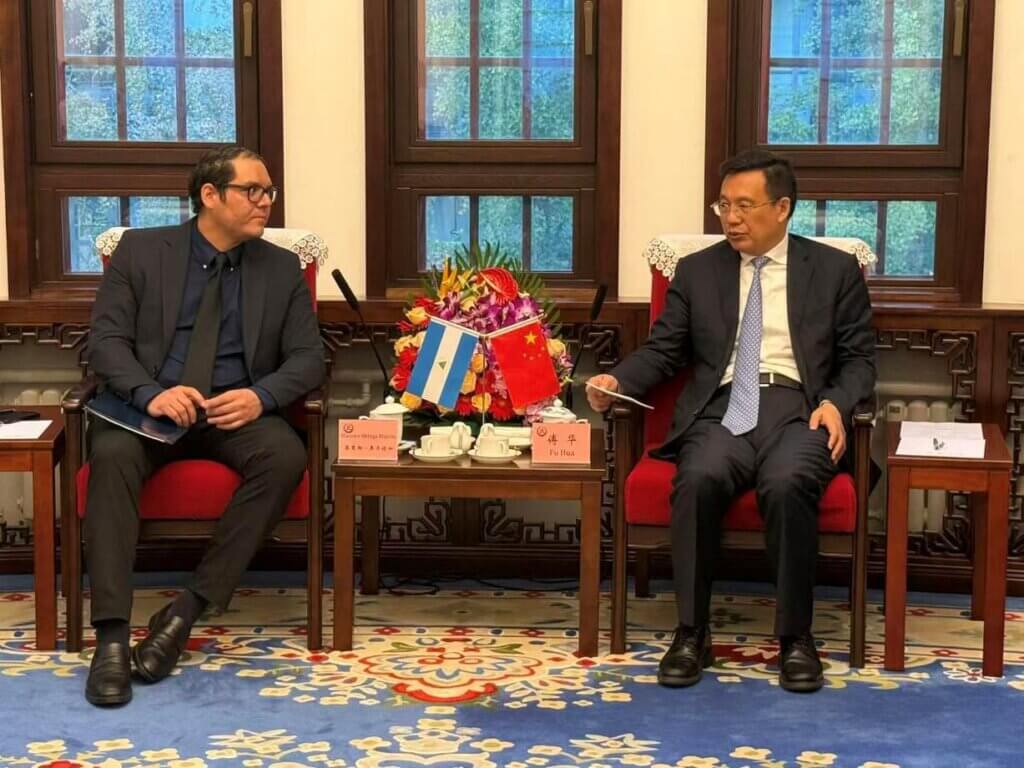
Today, only Guatemala and Belize maintain formal ties with Taiwan in Central America; the rest recognize Beijing. Beneath the surface of formal diplomacy, however, trade with the People’s Republic of China keeps expanding. The state has held to its diplomatic loyalty for almost a century, while citizens buy by a different logic. That disconnect makes it necessary to understand what goes on in Guatemalans’ minds, apart from official treaties.
To map those perceptions, we designed a mixed-methods exploratory study, carried out in the second quarter of 2026. Its aim was to identify the imaginaries that circulate among Guatemalans about the People’s Republic of China (PRC), with its capital in Beijing, and the Republic of China (Taiwan), seated in Taipei. From there, we examined the sources and mechanisms through which those perceptions form.
The first phase was a structured questionnaire of twenty open-ended and multiple-choice questions, built on Google Forms. It was distributed between April 24 and May 5 through social media and messaging groups (WhatsApp and Meta Messenger). To balance the sample, we monitored responses to certain psychographic questions during fieldwork and invited people who could refer us to less-represented segments. The final sample comprised 152 respondents, all residents of Guatemala who agreed to participate voluntarily, recruited through non-probability convenience sampling. The quantitative results were analyzed in an Excel spreadsheet, with an AI tool (Claude) supporting tabulation and the review of cross-tabulations. All percentages were checked and corrected manually before the final write-up.
We complemented these results with eleven in-depth interviews: ten respondents who served as direct follow-ups to the survey, plus one outside trade profile used to probe the material side of the goods trade. For the qualitative phase, we sought people with varied experiences: young students, people who had traveled to the places in question, merchants who import from Asia, descendants of Chinese families, and people with little or a great deal of knowledge of the subject. The interviews took place between May and July, through voice messages on messaging apps, phone calls, in-person recordings, and written questionnaires, depending on each participant’s preference and availability. We used a flexible guide tailored to each profile.
The results cannot be extrapolated statistically to the general population, but they do offer a qualitative diagnosis of the patterns, biases, and information gaps in how China and Taiwan are perceived from Guatemala. We supplemented the fieldwork with a review of secondary sources (articles, essays, press reports, and studies), which were stored and cross-checked with the journalism tool Pinpoint.
The findings are presented in a series of five articles. This is the first.
The slate isn’t blank
“I had heard so little about Taiwan... I thought it was a super tropical island, like Hawaii, but Asian at the same time,” recalls Kurumi Sandoval, another Guatemalan student on scholarship on the island, describing the image she had before traveling. Her vague, preconceived picture closely resembles Andrea’s.
That vagueness is no accident. Asked what word or concept came to mind when they heard “China,” the 152 respondents converged with striking consistency. The most frequent category was power and might (18.4%), followed by production, industry, and trade (16.5%), and culture and tradition (15.3%), with recurring references to technology and food. Almost no one left the field blank.
Taiwan was different. The most common associations clustered around scholarships, education, and cooperation (13.2%) and geographic references (13.2%) such as “Asia” or “the East,” but no dominant image emerged to organize the rest. The most telling figure: nearly one in twenty (4.6%) answered “I don’t know” or “no idea,” and 13.8% simply wrote “China” or “the same.” Counting these non-answers, roughly two in ten participants (18.4%) could not mentally separate the island of Taiwan from its continental neighbor, the PRC.
“Many times people can’t even tell them apart... Even people with a higher level of education confuse the diplomatic relationship,” says Marcela Gereda, a Guatemalan journalist and social anthropologist, and the granddaughter of a former Guatemalan ambassador to Taiwan, who was also interviewed.
One enters with authority, the other enters offering something
The study went a step beyond words and asked participants to imagine China and Taiwan as people walking into a room. The aim was not to test knowledge of international politics but to capture the intuitions on which each country’s identity is built.
Picturing the People’s Republic of China coming through the door, most respondents said it would enter “cautiously, observing.” The second most common image was of someone who moves forward “offering something,” followed by the sense that it would arrive “with authority, taking up space.” Going unnoticed was an almost nonexistent answer.
China appears as a presence that needs neither to explain itself nor to ask permission. It is large, visible, and hard to ignore. “I admire how the political class sets its own direction and it isn’t imposed from outside... It’s state capitalism that defends the interests of its citizens,” says the journalist Marcela Gereda.
For Taiwan, the most frequently chosen option was “enters offering something,” with 37.5% of responses. That perception far outpaced the share who imagined it as “discreet” or “cautious.” Another 13.2% would not know how to picture it. While China is defined by its mere presence, Taiwan is tied to a direct action: it is not enough for it to walk into the room; it has to come bearing scholarships, infrastructure, or aid.
For decades, that perception has been fed by cooperation programs that keep Taiwan’s presence visible in the country. “You can see that Taiwan has a lot of investment nationwide... support for health, education, roads,” says Jorge Manzo, a student at Universidad Francisco Marroquín in Guatemala City who took part in the survey.
Through its cooperation agency alone, the Taiwan International Cooperation and Development Fund (Taiwan ICDF), official records compiled between 2010 and 2025 show 24 development projects implemented and completed in the country. Another 8 are currently active in key areas, such as the Bamboo Project, renewed in February 2026, and the Maternal and Neonatal Medical Technology project, Phase II.
Why do the two seem to have such different “personalities”? In part because Guatemalans do not reach each one by the same route.
The route to China’s image is paved with frequent contact with everyday products, “Chinese food,” and global news. “Even though Guatemala has no diplomatic relations with the PRC, people consume Chinese products all the time,” explains Haydeé Archila, a Guatemalan journalist who was also part of the study.
A merchant of Chinese descent who was interviewed and asked to remain anonymous confirms it from his own shop: “I sell Chinese products, not Taiwanese ones. And customers automatically know they come from China; they don’t connect them with Taiwan anymore.”
The route to Taiwan’s image is narrower, bounded by government news, study scholarships, and state cooperation. José Fernández del Cid, a Guatemalan journalist who spent fifteen years covering the relationship among Guatemala, China, and Taiwan, sums it up: “Over the years the news was that a donation or a construction agreement was coming... I think it’s a pattern that runs through the years.”
If China arrives through accumulation, Taiwan arrives in scattered episodes that rarely connect with one another. In marketing terms, the PRC works like Coca-Cola: it is everywhere and needs no introduction to be recognized. Taiwan is closer to a high-quality medicine, well regarded among those who know it but seldom a spontaneous topic in everyday conversation.
Guatemalans have an image of China but no clear sense of what it wants. With Taiwan, many know what it offers but struggle to imagine who it is.
A fragmented relationship
Imagine two sisters, each claiming to be the sole legitimate heir to the same family home. Each tells her own version of the story, but only one can sit on the homeowners’ association board. That, roughly, is how the dispute over representation between Beijing and Taipei works, a conflict most Guatemalans have never had reason to understand.
Survey responses suggest that, for many Guatemalans, the conflict is abstract and remote. Asked what link exists between the two, respondents split into three broad groups: four in ten (38.8%) described them as distinct but related countries; a quarter (25.7%) considered them entirely independent; and 12.5% said they are, in fact, the same country.
On Guatemala’s own diplomatic ties, 88.8% know that the country officially recognizes Taiwan. The rest either have no idea, believe Guatemala has ties with both, or wrongly assume that the official recognition is with Beijing. Most respondents also do not know how long the relationship has lasted, or do not see it as relevant: 57.9% were unaware that it has now been in place for more than ninety years.
Asked to name a concrete contribution from Taiwan to Guatemala, most respondents recalled roads and road infrastructure, as well as education and scholarships. Alongside those mentions, however, political corruption scandals also came up. In public memory, cooperation and controversy sit side by side in the same recollection.
Fernández del Cid attributes this to a pattern of announcements that rarely materialize: “The news was that a donation or a construction deal was coming, usually for health, and it was never built. At the end of each presidential term the honeymoon was over and the accusations of pocketing the money began.”
An inherited relationship
Guatemala’s tie with Taiwan is not the product of a recent strategic decision but the continuation of a foreign policy inherited from another historical moment. The first official contacts between the Central American country and China date to 1909, when the Qing dynasty still ruled, and were formalized with the opening of a consulate in the 1930s. After the Communist victory in the Chinese civil war in 1949, the Nationalist government of the Republic of China withdrew to Taiwan, while the newly founded People’s Republic of China took control of the mainland. In the Cold War context of anticommunism and strong US influence in Central America, Guatemala kept its diplomatic recognition of the government based in Taipei and upgraded the relationship to embassy level in 1960.
Over the years, China’s growing political and economic weight in the international system led most countries to stop recognizing the Republic of China on Taiwan and to establish relations with Beijing. Guatemala, by contrast, has stayed within the small group of countries that still officially recognize Taipei, a decision no government has wanted to change.
For Taiwan, that recognition is essential. It allows Taiwan to keep diplomatic allies in the face of pressure from Beijing, which considers the island part of its territory. For Guatemala, the recognition of Taiwan contrasts with an economic reality marked by the wide presence of products from mainland China.
Perceptions before contact
History explains why Guatemala maintains diplomatic relations with Taiwan. It is not enough, however, to understand the place China and Taiwan hold in the Guatemalan imaginary.
More than a third of respondents (37.5%) do not know anyone of Chinese or Taiwanese origin. About two-fifths of the sample (41.4%) described the Chinese community as “distant,” while 69.3% said the same of the Taiwanese community. Another 33.6% have no reference point for judging it close or distant. Despite that distance, respondents hold well-defined opinions about both countries.
On products “made in China,” the first things that come to mind are mass production and low prices, though almost one in four respondents (25.7%) also associate them with technology and prestige. With Taiwan, nearly half (40.5%) say they can recall a brand or technology from the island, but about one in five (19.7%) named brands that are not actually Taiwanese, such as Samsung, Huawei, Lenovo, or Intel.
Imaginaries are also fed by stereotypes and by the ways people name the other. Lillian Lee, a Guatemalan interviewee of Chinese descent whose family emigrated to Guatemala around 1900, decades before the split between the PRC and Taiwan, explains from her own experience: “Ever since I was little, people had always called us ‘Chinese, Japanese...’ The truth is, it never bothered us... They just assume.”
A difference yet to be explained
Limited as it is, this research suggests that Guatemala does not lack images of China and Taiwan. Two images are already lodged in Guatemalans’ minds, each built and fed in a different way. China projects itself clearly and holds a recognizable place in daily life, while Taiwan appears in fragments and is often confused with its continental neighbor.
This is the first article in the series “China and Taiwan in the Guatemalan Imaginary,” which seeks to understand how perceptions of China and Taiwan take shape in Guatemala. This installment establishes that a difference exists between the two, but does not yet explain what produces it. The next two articles will examine the role of trade and everyday objects, the confusion among East Asian countries, and the influence of diplomacy, social media, and algorithms in shaping those perceptions.
About the authors:
Lucía Escobar
Guatemalan journalist and communicator with more than 25 years of experience in independent journalism, freedom of expression, human rights, and social and community dynamics. She has worked for media outlets in Guatemala and across the region, developing communication and cultural management projects. She has received investigative journalism fellowships and has consulted for international organizations. She currently lives in exile in Mexico City, where she continues to practice journalism.
José Enrique Martínez
Guatemalan marketer and researcher. He has designed and taken part in studies on marketing, public health, and behavior change in Central America. He currently works as a strategist and consultant, combining social research, product development, and commercial growth.
Translation note. This English version was translated from the Spanish original with the assistance of an AI tool (Claude, developed by Anthropic) and reviewed and edited by the FAB team. It adapts phrasing and structure for English-language readers rather than following the original sentence by sentence. Interview quotes were given in Spanish and are FAB translations. Data, findings, and attributions are those of the original article; in case of any discrepancy, the Spanish version is the reference text.