
A report from the series “China and Taiwan in the Guatemalan Imaginary”
What do Guatemala, Paraguay, the Vatican, the Marshall Islands, and the African nation of Eswatini have in common? The answer is that they belong to the small group of countries that diplomatically recognize the Republic of China (Taiwan) as a sovereign state.
While most nations on the planet have adopted the “One China” policy and maintain official relations with Beijing, these countries make up the list of just twelve diplomatic allies Taipei has left. Of them, Guatemala is the only one in Central America and the most populous worldwide. It also holds one of the oldest diplomatic relationships with that government: 92 years of “sound friendship.”
Yet, according to an original study for this series, that decades-long tie does not necessarily translate into a clear image, or an everyday presence, in Guatemalans’ minds.
by Lucía Escobar y José Enrique Martínez
To assess perceptions of Taiwan and China, we ran an online survey of 152 Guatemalan residents and, based on their answers, conducted in-depth interviews with some participants. The results show that Taiwan occupies a hazy place: associations with it are few and, in some cases, even confused with other countries.
Cooperation with the government of the day is there. The embassy is there. But where does Taiwan fit into the daily life of the average Guatemalan?
A fragmented image
According to the research, nearly one in five respondents cannot form an image of Taiwan of their own. Asked for the first thing that came to mind on hearing “Taiwan,” the most frequent answers were scholarships, education, or cooperation (13.2%) and general geographic references (13.2%). Almost 5% (4.6%), however, said they did not know what to associate with the country, while another 13.8% identified it directly with China. Taken together, 18.4% either failed to form an image of their own or confused it with China’s.
China evokes consistent associations through trade (see this series’ report, The Embassy of Things). By contrast, when it comes to Taiwanese brands and products, Guatemalans’ minds are not much clearer either. Although two in five participants (40.1%) said they associate some product or brand with Taiwan, almost one in five of them (19.7% of that group) named companies that actually belong to other countries, such as Samsung, Intel, Toyota, Huawei, or Lenovo, and even the American company Ford.
The survey also shows how that fragmented image takes shape. Taiwan appears mainly through mediated channels. Two in five respondents (41.4%) said they know it from the news, while 26.3% know it through conversations with other people. By contrast, only 9.9% reported direct experience with the country, and roughly a third (30.9%) admitted they have little or no image of Taiwan at all.
Younger respondents are the segment where this lack of awareness is sharpest. Sebastián, a university student between 18 and 24 who was interviewed for the study, admits candidly: “Honestly, I don’t know anything about Taiwan, nothing comes to mind. To me it’s a distant country and, to be honest, I often find it hard to tell it apart from China or from what’s happening in that part of Asia.”
As Guatemalan journalist Haydeé Archila points out, this disconnect is not limited to less-educated groups: “Even the most educated don’t see the difference,” she says, showing how treating “Chineseness” as one homogeneous whole erases the particular identity of Taiwan in the mind of the average Guatemalan.
Taiwan walks into the room
If Taiwan’s image is built through indirect references, it is worth asking what kind of presence it conveys when Guatemalans picture it. The survey posed a projective question: if China and Taiwan walked into a room, how would each of them do it?
China enters cautiously (31.6%). Taiwan enters offering something, according to 37.5% of participants.
While China’s image is tied to a power that produces, exports, and dominates the market, Taiwan’s is linked to cooperation. More than half of respondents (59.2%) believe Taiwan has contributed something to Guatemala. The most frequent unprompted mentions were roads and road infrastructure (29 mentions), followed by study scholarships (23).
The embassy of scholarships
One such initiative allowed journalist and communicator Haydeé Archila to travel to Taiwan in 2009, invited to a program on national development and media, fully funded by the island’s government.
“We were participants from several allied countries,” Archila recalls. “The program included visits to development projects; basically, they showed us everything related to their infrastructure, technology, universities, how their whole way of life worked over there, so that somehow we could... act as the communication channels for what they had there and how they had developed.” As she explains, the purpose of these state-sponsored invitations is clear: “To showcase Taiwan’s development model and how they managed to modernize so quickly.”
Study scholarships are only one part of Taiwan’s diplomatic strategy. Behind them lies a broader cooperation policy that includes technical cooperation, humanitarian assistance, investment, and financing.
Historically, the island has devoted between 30% and 50% of its Official Development Assistance (ODA) budget to Latin America and the Caribbean. Guatemala has been one of the main recipients of that cooperation. With close to 19 million people, it is Taiwan’s most populous remaining diplomatic ally and, after the breaks with Panama, El Salvador, Nicaragua, and Honduras, its main partner in Central America.
In Guatemala, this policy translates into large-scale projects. The most emblematic is the financing for widening to four lanes the highway connecting the capital with Puerto Barrios, a project estimated at $680 million. For it, Taiwan structured a $600 million package: a non-reimbursable grant of $250 million and a concessional loan of $350 million over 30 years.
Cooperation extends to other sectors as well. Through the Taiwan International Cooperation and Development Fund (Taiwan ICDF), the island supports bamboo development projects, the modernization of maternal and neonatal care, and technical assistance to the agricultural sector. Among these, one notable effort uses Formosat-8 satellite imagery, drones, and canine units to detect Fusarium fungus in banana crops, an industry that generates more than $1.5 billion a year in exports. Cooperation has also funded the construction of the Chimaltenango National Hospital (2023, $22 million), a neonatal center at the San Juan de Dios General Hospital (2024), and the equipping of the future national oncology center with two linear accelerators, agreed this year.
For Taiwan, Guatemala’s diplomatic recognition helps preserve a network of support in international forums and multilateral bodies, such as the UN and the WHO. Guatemala, in turn, benefits from cooperation and direct assistance programs channeled government to government.
The elephant in the room
The survey also revealed a less favorable association. Some 4.6% of participants spontaneously linked Taiwan with “corruption,” “bribes,” or “chinocheques” (a Guatemalan term for illicit Taiwan-linked payoffs), a reference to former president Alfonso Portillo, who pleaded guilty in the United States in 2014 to laundering $2.5 million received from Taiwan.
For journalist José Fernández Del Cid, this perception took hold after years of press coverage: “The news was that a donation was coming... and by the end of each president’s term, politicians would start being accused of pocketing the money. The money was seen as a way to grease diplomatic relations.”
Yet that memory coexists with the memory of an ally that gives. “Many people who have studied there or received support hold a very positive image,” says journalist Haydeé Archila. “But it’s also true that corruption has weighed heavily on the relationship at certain moments.”
Kurimi’s awakening
Kurimi Sandoval is one of more than 600 young Guatemalans who have received a scholarship to study in Taiwan over the past two decades. Before leaving, “I had heard so little about Taiwan... I knew it existed, but I knew absolutely nothing about it.” Browsing university options online, she read “university by the beach” and pictured “a super tropical island... maybe like Hawaii,” she recalls.
The image changed from day one. “From the moment I landed... at the airport, taking the metro to get to my Airbnb, I thought: ‘Oh, okay, this isn’t just some island.’” The contrast with public infrastructure was immediate. “I really think that, as Guatemalans, our public transportation is nowhere near comparable to the metro system there.”
For journalist Archila, that shift is no accident. “I do think it changes your perception when you travel there, because you get to know a Taiwan very different from the one usually imagined from Latin America.” “You see a modern, orderly country with a huge amount of technology; it’s amazing everything you get to see there... seeing a building like Taipei 101, for instance, is truly a spectacular feat of architecture and engineering.”
Over time, Kurimi discovered something else. “At my university there’s an older man who always comes to talk to the students, and he always... says: ‘Oh, yes, from Guatemala... Guatemala and Taiwan are very good friends.’”
Taiwan practices “people-to-people” diplomacy under its doctrine of integrated diplomacy, in which “every citizen will be a diplomat and every ministry a ministry of foreign affairs,” a doctrine championed by its current foreign minister, Lin Chia-lung. Even so, that experience remains the exception. For the vast majority of Guatemalans, Taiwan will keep being a distant country known mainly for its scholarships and its cooperation.
That appears to be Taipei’s real challenge. Diplomacy has managed to build roads, hospitals, and scholarships. Building a place in the imaginary of the average Guatemalan is a different, much slower undertaking.
Translation note. This English version was translated from the Spanish original with the assistance of an AI tool (Claude, developed by Anthropic) and reviewed and edited by the FAB team. It adapts phrasing and structure for English-language readers rather than following the original sentence by sentence. Interview quotes were given in Spanish and are FAB translations. Data, findings, and attributions are those of the original article; in case of any discrepancy, the Spanish version is the reference text.
About the authors
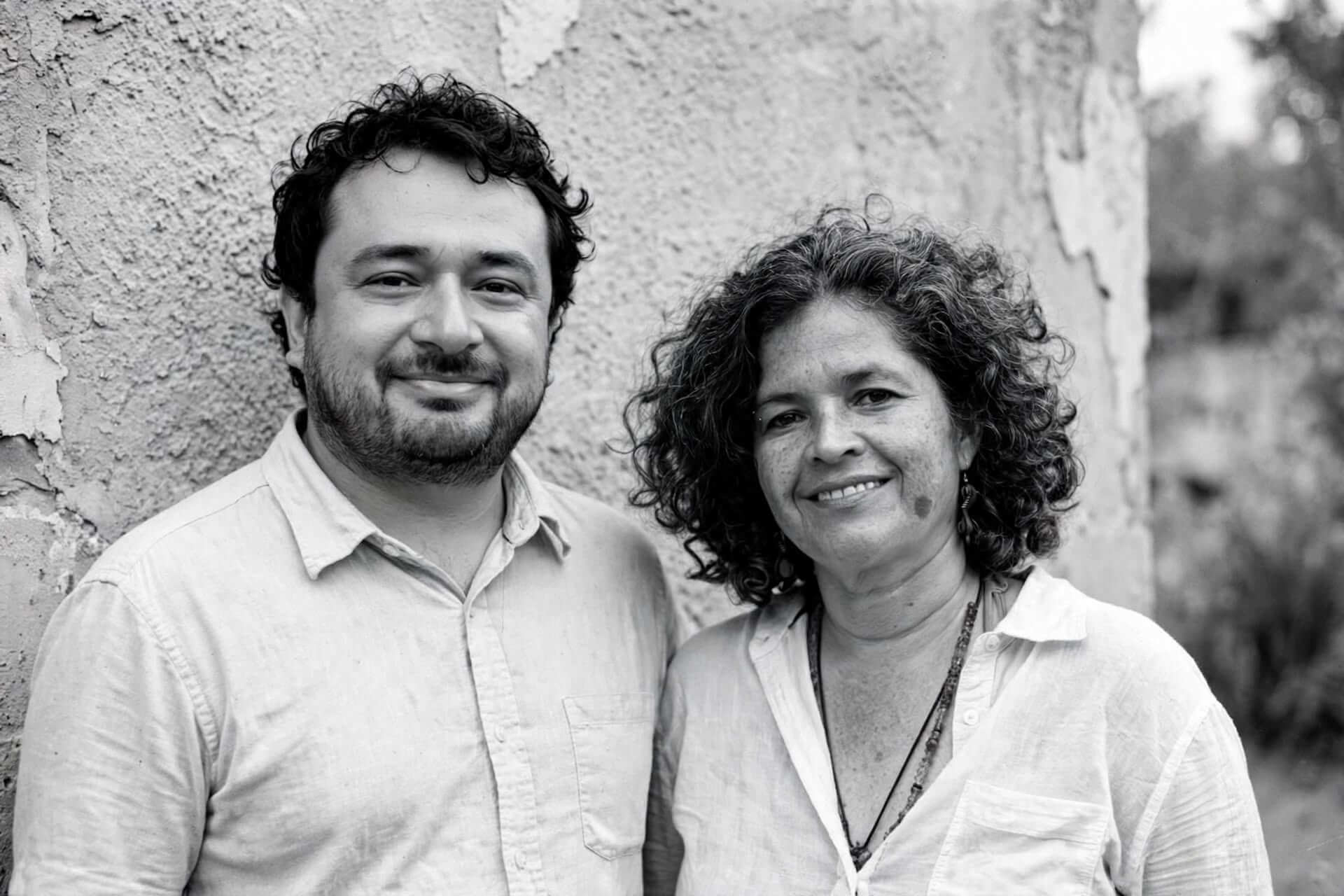
Lucía Escobar
Guatemalan journalist and communicator with more than 25 years of experience in independent journalism, freedom of expression, human rights, and social and community dynamics. She has worked for media outlets in Guatemala and across the region, developing communication and cultural management projects. She has received investigative journalism fellowships and has consulted for international organizations. She currently lives in exile in Mexico City, where she continues to practice journalism.
José Enrique Martínez
Guatemalan marketer and researcher. He has designed and taken part in studies on marketing, public health, and behavior change in Central America. He currently works as a strategist and consultant, combining social research, product development, and commercial growth
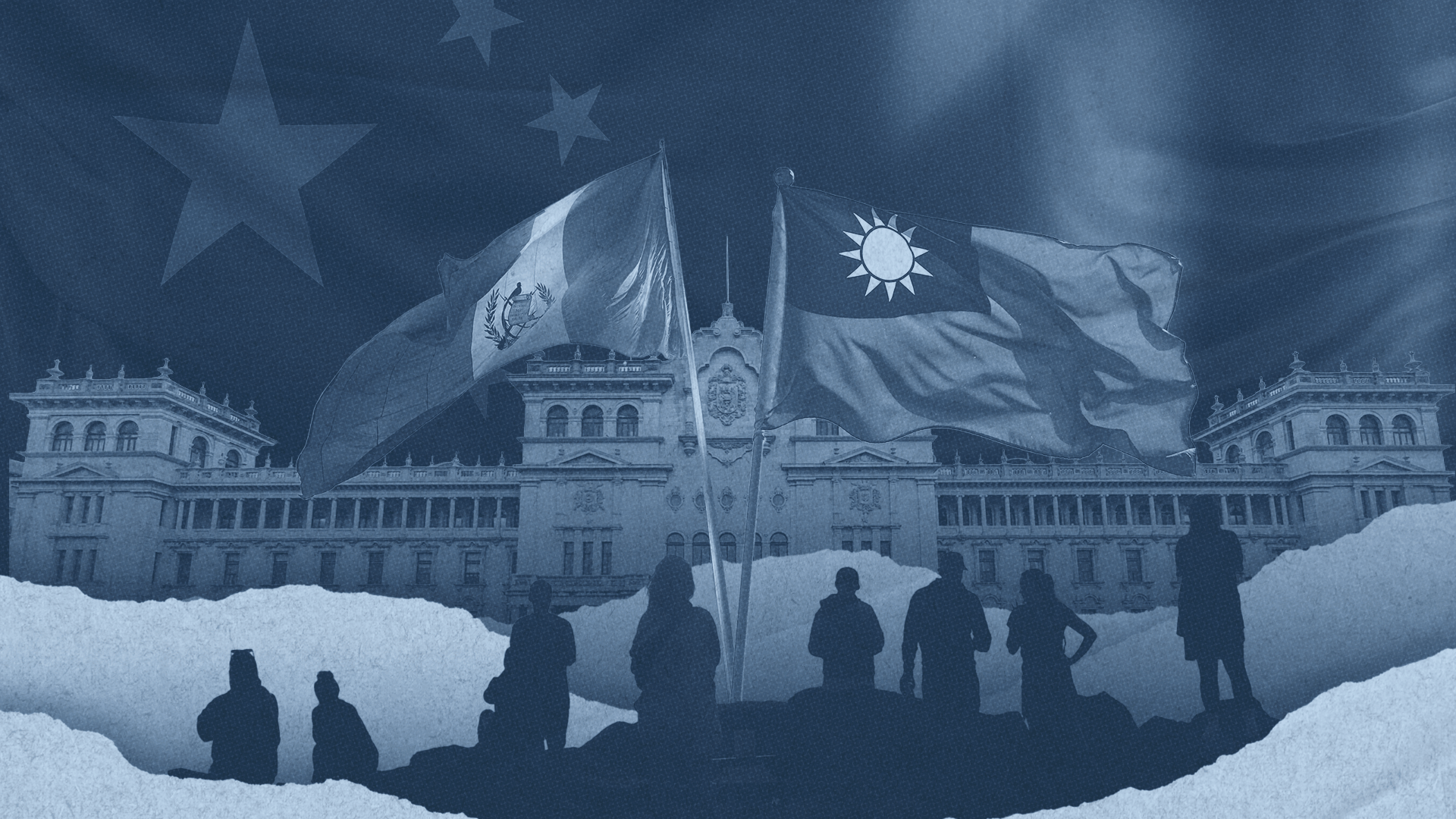
China and Taiwan in the Guatemalan Imaginary
A survey of 152 Guatemalans and eleven in-depth interviews reveal how perceptions of China and Taiwan form, and why nearly 2 in 10 cannot tell them apart.
The Embassy of Things