A report from the series “China and Taiwan in the Guatemalan Imaginary”
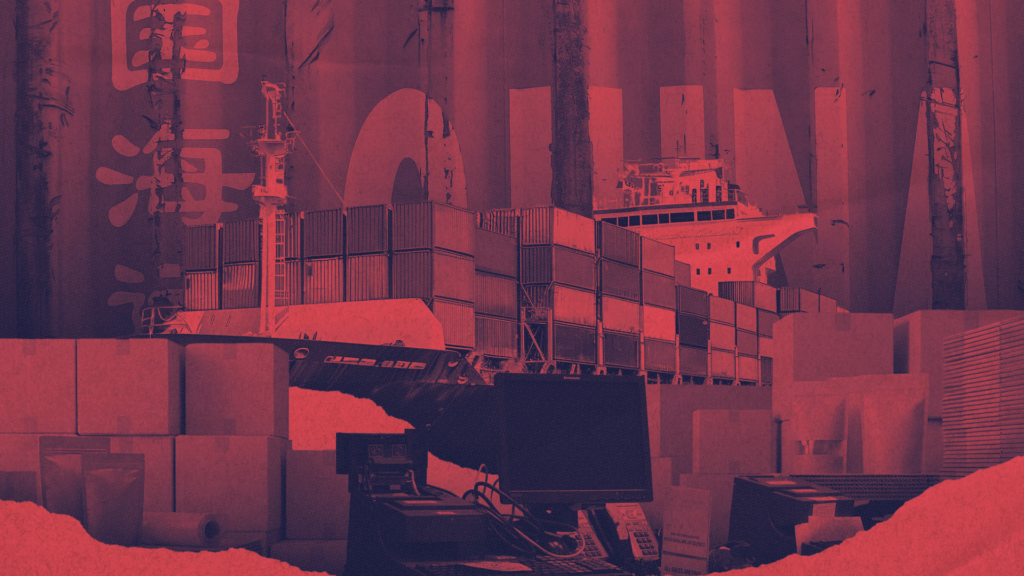
The traffic light on Avenida Reforma, a main artery of Guatemala City’s financial district, turns red. A vendor stretches out an arm to offer a phone charger to a courier riding an Italika. In a nearby mall, a young woman stops in front of a shelf of minimalist toys, while at the neighborhood market a grandmother asks whether the Teflon on a pan for sale “comes off.” The surrounding buildings are full of workers typing on Lenovo computers, buying office supplies, or eating lunch in an executive cafeteria, off porcelain plates stamped Made in China.

by Lucía Escobar and José Enrique Martínez
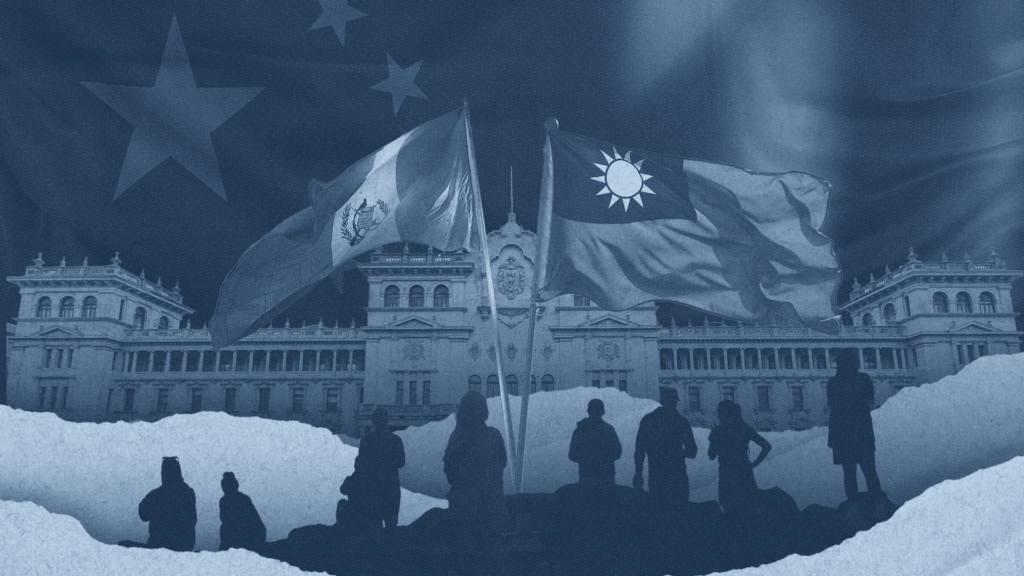
None of these people is thinking about geopolitics. None has the Taiwan Strait in mind, or the debates at the UN General Assembly, or Taipei’s efforts to win international recognition. For them, China is not an ideological position; it is the texture of their daily routine. Officially, the People’s Republic of China (PRC) has no diplomatic relations with Guatemala. There is no red five-star flag flying over a building, no ambassador signing bilateral agreements with the government of the day. Diplomatic recognition belongs to Taipei. Yet the absence of an embassy is filled by the weight of things.
British anthropologist Daniel Miller, who specializes in material culture and the relationship between people and objects, argues in his theory of the “humility of things” that material objects are powerful not when they are conspicuous but precisely when they become invisible. “By operating silently as the frame of our routine, they shape our behavior and expectations without our noticing or being able to challenge them.”
For this series, and to explore how Guatemalans perceive China and Taiwan, we ran an original mixed-methods study. It draws on in-depth interviews with people of varied experience (young students, people who had traveled to the places in question, merchants who import from Asia, descendants of Chinese families, and people with little or a great deal of knowledge of the subject), selected according to their answers to an earlier online survey. That survey was completed by 152 Guatemalan residents who agreed to participate, and it included projective, open-ended, and multiple-choice questions.
The study set out to measure cultural diplomacy, that is, how a country’s image forms through institutional presence, bilateral relations, and declared soft power. What it found was something else: material diplomacy. China made its way into Guatemalans’ minds not through an embassy, popular culture, or foreign policy, but through everyday objects and the affordable prices of its products. It did so with that “Made in China” label that almost nobody reads consciously but everyone recognizes on the clothes they wear and the appliances they have at home. That was not in the original hypothesis, and it is the study’s most interesting finding.
The embassy of things
Asked what word or concept came to mind on hearing the word “China,” about one in six respondents (16.5%) named production, industry, and trade, and about one in five (18.4%) named “power, greatness, and might.” On products “made in China,” the first thing that comes to mind is “mass production” (69.7%) and low prices (63.2%), although almost one in four (25.7%) also associate them with technology and prestige.
China is still perceived as a synonym for cheap, low-quality products. The data, however, tie it to a more complex mix of affordable prices, functionality, technology, and variable quality. The image reflects China’s global transformation, from a low-cost manufacturing platform to an industrial power with far broader capabilities. That the cheap and the innovative coexist reveals an imaginary in transition.
Because the survey measured variables typical of a market study, we also ran a country-brand analysis of “China.” It showed high, consistent spontaneous recall. Asked to define China in one word, respondents gave immediate, coherent answers across age and occupation groups. In marketing terms, this is top-of-mind: the brand that comes up first without anyone calling it.
China’s associations are strong, coherent, and predictable across all age groups, according to the cross-tabulations. It is a “brand” with a contradictory image, but the contradiction is consistent. In marketing, a predictable brand, however imperfect, is more powerful than an aspirational but diffuse one.
We also wanted to identify the channels through which respondents form their perception of China. The results support the “material diplomacy” thesis. The Asian country’s mental presence in Guatemala has been built on people’s physical, commercial, and everyday experience, well above institutional or press channels.
The numbers back the premise. Breaking down the sources of this perception, products and technology account for 57.2% of mentions, followed closely by restaurants and food at 72.4%. By contrast, local stores and markets capture 40.1% of attention, slightly ahead of social media (30.9%), everyday conversations (30.3%), and direct experience (15.8%). In a cross-tabulation, 110 people (72.4% of the sample) selected purely material channels for China: products, stores, or restaurants.
With no formal diplomatic delegation, Beijing has raised a headquarters without the need for bureaucracy. China has no official building in the country, but its objects hold an everyday place in the lives of millions of Guatemalans. If an embassy represents a state abroad, here it is the products that do the work.
The numbers tell the story
Over the past three decades, Guatemalan imports from China have grown steadily, to the point of transforming the composition of the country’s foreign purchases. According to a report by Sergio Morales in Guatemala’s newspaper La Hora, “32 years ago, in 1994, China wasn’t even among the top 10 countries from which Guatemala imported.” By 2004 it had climbed to eighth place and, in 2014, to third.
The Bank of Guatemala’s report on monthly imports by selling country shows that from January to May 2026, Guatemala imported US$2,486,018,697 from the PRC, second only to the US at US$5,000,999,014. Taiwan ranks 28th, at US$78,891,480. Imports from China have grown 11.6%, while those from Taiwan have fallen 2.6%.
What kind of embassy did China build?
According to the Observatory of Economic Complexity (OEC), in 2024 China’s import basket in Guatemala was led by machinery and mechanical appliances at US$823 million, followed by electrical and electronic machinery (US$739 million) and cars, tractors, trucks, and parts (US$577 million).
In May 2026, according to the same source, total imports from China came to US$502 million (a 7.39% increase over May 2025). On the podium of most-imported products, semi-finished iron ranks third at US$20.3 million; local industry turns it into rebar, structural steel, pipes, sheets, and profiles, in other words, the materials that hold up the country’s construction. The everyday presence, however, becomes more evident in the next two categories.
Tied at US$20.3 million, in second place, are motorcycles and two-wheeled vehicles. One example is the Italika brand, whose motorcycles and parts are 100% manufactured in and imported from allied plants in China (mainly from Chinese giants such as Loncin and Zongshen) and then distributed on a massive scale in the country. According to the Elektra stores’ website, two models of that brand rank among the three best sellers.
The Haojue brand also stands out, ranking second in sales according to a 2025 report by Emisoras Unidas. Its presence has grown nationwide thanks to its alliance with, and backing from, Cofiño Stahl and Motos Génesis. Other brands include CFMoto, Awan, Freedom, and Serpento. The latter are trademarks developed and distributed by large retail chains in Guatemala, such as El Gallo más Gallo. These companies design the brand name locally but buy containers of disassembled motorcycles directly from generic factories in China, then assemble them in Guatemalan workshops. Before becoming a delivery rider’s vehicle or a family’s first major asset, these motorcycles had already traveled thousands of kilometers from a factory in China.
Also, in first place among May 2026 imports, according to the OEC, are phones, at US$25.2 million. This is no minor point: it shows that the main point of contact between the Asian country and the average Guatemalan happens through a screen. China is Guatemala’s third-largest global supplier of phones, injecting US$115 million a year into the country’s import market. It is also the source of phone imports with the highest growth rate. According to the Mobile Vendor Market Share published by StatCounter Global Stats for June 2025 to June 2026, Xiaomi has consolidated as the third most-used phone brand in Guatemala, with 8.51% of the active market, followed closely by Honor, which already captures 7.03%.
The phone imported from China is not just a communication channel but the main medium for most digital interactions. It is the physical device that shapes the daily life, consumption, and entertainment of millions of people, opening the door to software platforms, digital commerce, and social networks such as TikTok. That phone does not only connect its user with other people. It also connects millions of Guatemalans with platforms, businesses, advertising, and content whose point of origin is, often, also in China.
From container to doorstep
A Guatemalan distributor opens TikTok after lunch. The algorithm does not show a dance or a recipe. What appears instead is a Chinese businessman walking among endless shelves in a factory. He speaks simple Spanish as he points to boxes ready for shipment: “Don’t buy from the distributor. Buy direct from the factory.” Below the video is a WhatsApp button.
Just a few years ago, importing from China meant saving up to travel to the Canton Fair, finding a reliable supplier, negotiating in another language, and filling an entire container. Today the distance is still more than 14,000 kilometers (roughly 8,700 miles), but the commercial distance is much shorter.
Organizations such as the China Council for the Promotion of International Trade (CCPIT) and business chambers, organize business roundtables, trade visits, and meetings with Central American entrepreneurs. They rely on descendants of the early twentieth-century Chinese diaspora. At the same time, social media has opened another channel of contact: factories that once sold only to large importers now look for distributors directly, through a Guatemalan merchant’s phone.
Logistics have changed too. Specialized companies consolidate cargo from different buyers into a single container and offer door-to-door services. Small merchants no longer need to import a full container; they can buy in small volumes, pay a price per kilo or cubic meter, and receive the goods at their business.
The strategy reaches its most visible expression on platforms such as Temu and AliExpress, where buying direct has become an everyday experience for millions of consumers. China has shortened the distance between its factories and those who buy their goods.
The other embassy
The diplomatic relationship between Taiwan and Guatemala is now more than ninety years old. It stands out as one of the oldest Asian relationships in Latin America. Its everyday presence, however, is very different from China’s. The Bank of Guatemala data presented at the start of this article reflect that difference.
The nature of what arrives also differs. According to the OEC, Taiwan mainly exports industrial inputs, auto parts, machinery, and specialized chemicals. These are goods that take part in production but rarely reach the consumer’s hands directly.
Taiwan lacks the volume and diversity of Chinese products but stands out in specific niches. It appears in hospitals, cooperation projects, study scholarships, and agreements between governments. China occupies the supermarket, the hardware store, and the street; Taiwan, the institutions. Its approach works as an attempt to build an “emotional and authentic bond” through specialized knowledge, trying to close the “cultural distance” that its goods, invisible like microprocessors, fail to bridge in the mass market.
As journalist Haydeé Archila sums it up: “Although Taiwan has been our country’s ally for decades, its presence in the collective imaginary is not necessarily proportional to that relationship. We don’t even know there are products made there; we attribute everything to China.”
From the toy city to the traffic light
The phone charger the street vendor offers at the traffic light on Avenida Reforma in Guatemala City, or the plastic toy a girl will buy at a town fair in the interior of the country, did not get there by chance. Behind each of these objects runs an invisible logistics chain that has completely transformed how Guatemala supplies itself.
At the center of this machinery are importers like Víctor Campollo, a Guatemalan businessman who has spent two decades importing plastic toys wholesale from the Chinese city of Shantou, known as “the toy city.” An estimated 12,000 factories and companies directly tied to the sector operate in Shantou and its main district, Chenghai.
Campollo distributes these products through two channels: sealed bales for warehouses and wholesale businesses, and sales by the dozen for small merchants in the informal economy, those who sell at fairs, town markets, or directly on the street, at a traffic light. When Campollo started in the business twenty years ago, the process was slow and depended on local intermediaries, who no longer exist. “It went through an office here in Guatemala that had suppliers over there,” he recalls.
Back then, importing meant sending physical photos, triangulating quotes, and trusting printed catalogs. Over time, the norm became the mandatory trip to the big trade fairs, such as the one in Hong Kong, to see the product and shake hands. Today, the COVID-19 pandemic and current geopolitics have completed the acceleration of a digitalization that rewrote the rules of the game. The physical trip is no longer indispensable.
Campollo’s main supplier runs an online platform with a catalog of around one million plastic toys, updated with more than 300 new photos a day. Plastic toys only. There are similar platforms for rubber toys and others for other materials. But the most drastic change is not in how Guatemalans look for China, but in how China looks for them.
“Before, having that supplier was an advantage. Now the Chinese come to you and speak Spanish. Very good Spanish... It’s my English that isn’t so good,” Campollo explains. “They’re definitely more aggressive now. Before, we went looking for them; now they come to Latin America to sell.”
That commercial aggressiveness has moved directly onto phone screens. Chinese manufacturers no longer wait in the industrial pavilions of Canton. They now advertise on social media and use algorithms that detect merchants’ location and interests. Shortly after a trip or a product search, platforms begin flooding distributors’ profiles with targeted ads in Spanish or English. The same happens the moment they get off the plane and leave the airport in Guangdong. Direct contact is closed through a WhatsApp or WeChat message, cutting out intermediaries and making it possible even for small importers to consolidate cargo in shared containers.
For the buyer who attends the fairs or picks up products at traffic lights, geopolitics is an abstract concept. Campollo’s customers do not care whether a toy comes from China, Taiwan, Japan, or Colombia; the only things that drive the purchase are price and function.
“What they really want is price,” the businessman notes. And in that equation, China’s capacity for mass production has no rival.
When the light turns green, the street vendor on Avenida Reforma goes back to walking among cars and motorcycles. In his hand is a charger that, before reaching that corner, was mass-produced, promoted through a digital algorithm, negotiated over chat, and shipped across the Pacific to be bought at an informal warehouse in downtown Guatemala City. Guatemala may keep recognizing Taipei diplomatically, while cooperation agreements are signed in government offices and scholarships are announced under Taiwan’s flag. But on the street, the material reality is different.
The People’s Republic of China needs no diplomatic seat with a crest and a flag. Its real embassy is divided into millions of pieces: it rides on the motorcycles that deliver food, it is displayed on the shelves of neighborhood markets, and it lights up every time a Guatemalan touches the screen of a cell phone.
References:
Miller, D. (1987). Material Culture and Mass Consumption. Blackwell.

About the authors
Lucía Escobar
Guatemalan journalist and communicator with more than 25 years of experience in independent journalism, freedom of expression, human rights, and social and community dynamics. She has worked for media outlets in Guatemala and across the region, developing communication and cultural management projects. She has received investigative journalism fellowships and has consulted for international organizations. She currently lives in exile in Mexico City, where she continues to practice journalism.
José Enrique Martínez
Guatemalan marketer and researcher. He has designed and taken part in studies on marketing, public health, and behavior change in Central America. He currently works as a strategist and consultant, combining social research, product development, and commercial growth.
Translation note. This English version was translated from the Spanish original with the assistance of an AI tool (Claude, developed by Anthropic) and reviewed and edited by the FAB team. It adapts phrasing and structure for English-language readers rather than following the original sentence by sentence. Interview quotes and other quotations from Spanish-language sources are FAB translations. Data, findings, and attributions are those of the original article; in case of any discrepancy, the Spanish version is the reference text.