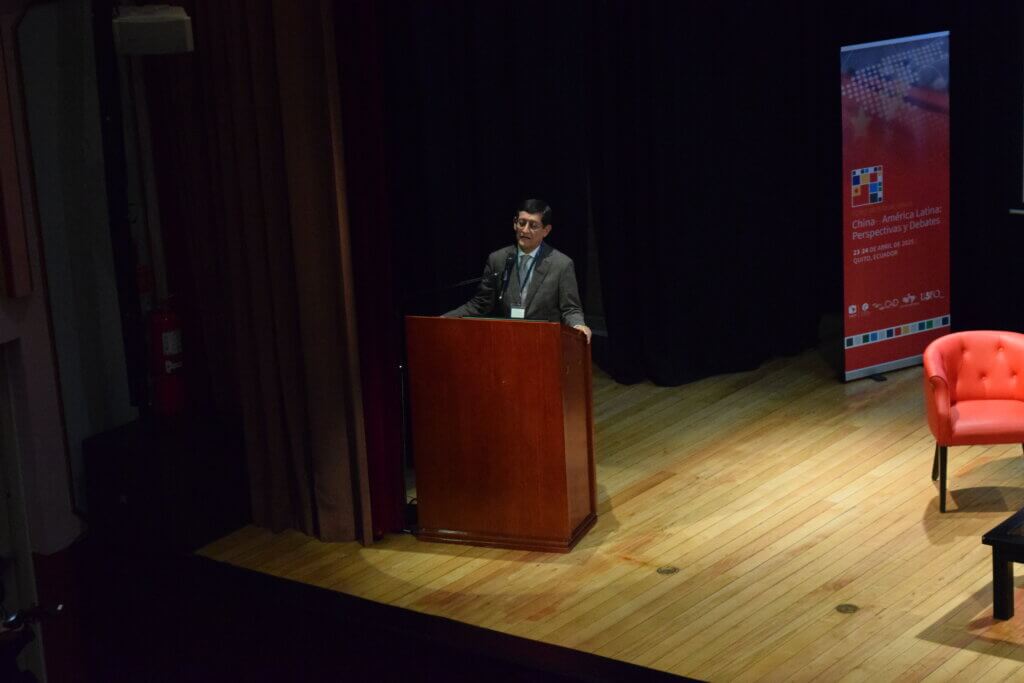
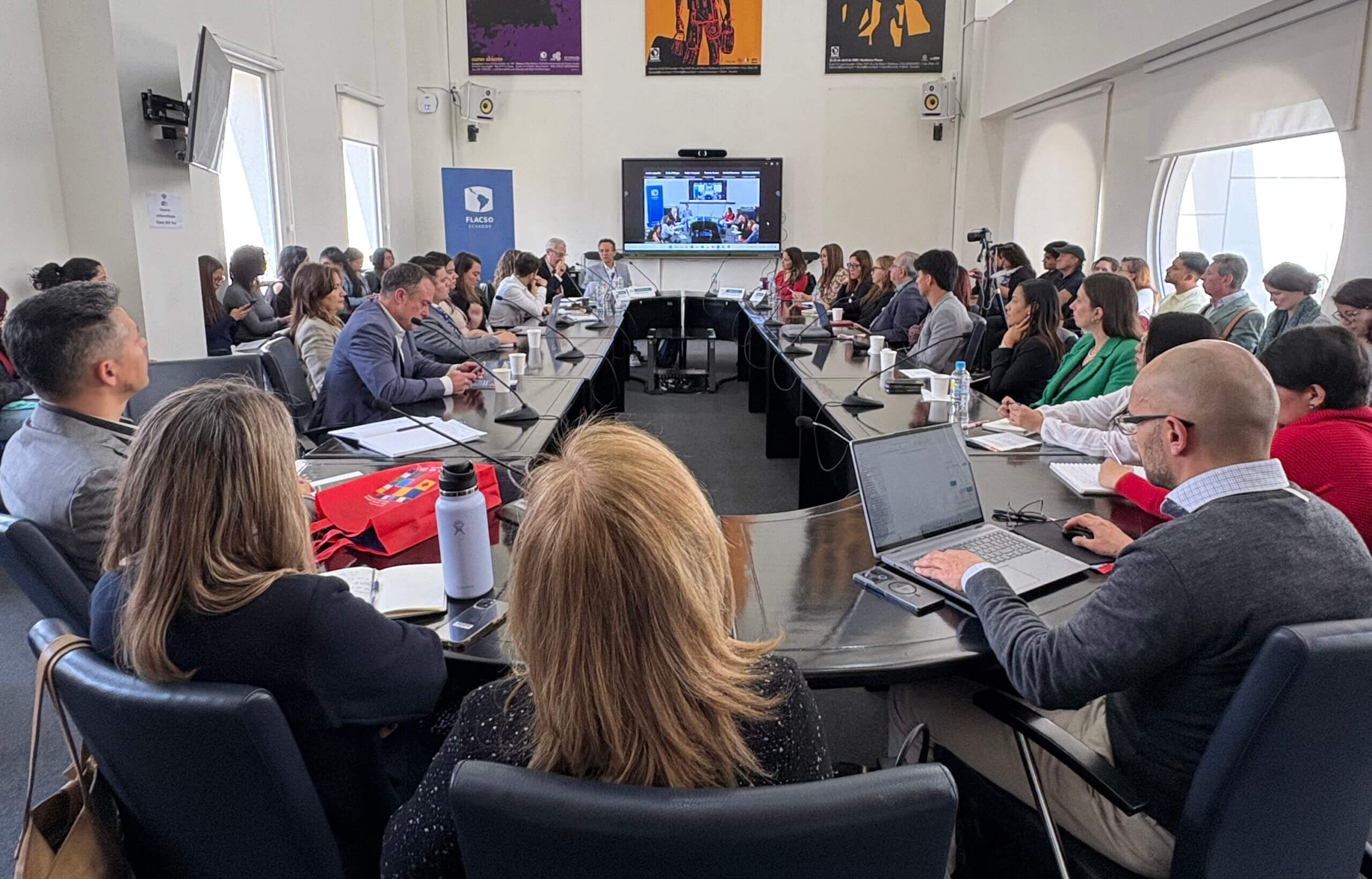
The second panel of the International Forum China – Latin America: Perspectives and Debates brought together experts from Argentina, Ecuador, and Peru to critically reflect on the effects of economic, commercial, and strategic relations between China and the region. Through interdisciplinary approaches and case studies, the panelists explored tensions, sectoral impacts, and long-term challenges in both bilateral and regional engagement.
Julián Varsavsky, Director of the Center for Asian Studies at the Universidad Nacional Mayor de San Marcos (UNMSM), analyzed the effects of Chinese imports on Argentina's industrial sector in his presentation, “The effects of Chinese imports in Argentina and the harm to industrial production in the context of bilateral relations under the presidency of Javier Milei. The case of Techint and steel.” Varsavsky warned about the unequal impacts of the bilateral relationship, highlighting the Argentine government's foreign policy dilemmas between its alignment with the United States and its need to maintain the currency swap agreement with China. He stressed that the region should pursue a joint trade agenda that prioritizes Latin American interests in the face of structural asymmetries with China.
Christian Zurita, Ecuadorian journalist and researcher, focused his presentation on the analysis of oil pre-sale contracts between Ecuador and China. In his talk, “Oil pre-sales between Ecuador and China: conditions and contracts,” he examined how these agreements—particularly during Rafael Correa’s administration—resulted in significant debt and unfavorable conditions for Ecuador, such as the undervaluation of oil compared to international market prices. Zurita emphasized the importance of strengthening institutional frameworks and the Ecuadorian state's negotiation capacity to secure more equitable agreements.
Juliana Mora, researcher at the Socio-Environmental Observatory of Chinese Investment in Ecuador (OSICHE) and professor at PUCE, presented her talk, “The political economy of Chinese cooperation in Latin America: continuities, ruptures, limits, and contradictions.” From a critical perspective, Mora explored the different dimensions of Chinese cooperation, including investment, financing, and trade. Using a comparative analysis between the Beijing Consensus and the Washington Consensus, she identified key tensions such as the deepening of extractivist models, limited transparency in agreements, and technological dependence. She warned against prioritizing short-term gains without considering long-term structural impacts.
Lorena Herrera, Ph.D. in International Studies from FLACSO Ecuador, presented her talk, “China and Latin America: strategic interactions in the 21st century in the port sector.” Drawing on the port connectivity index and emblematic cases such as the Chancay megaport (Peru) and port projects in Panama, Herrera discussed China’s role as a key actor in regional maritime infrastructure. She underscored that this strategy follows a long-term logic within China’s global projection, carried out through concessions, technological investments, and strategic cooperation in key sectors such as transport and logistics.
Panelists:

Julián Varsavsky – Página/12 and Fundación Centro Psicoanalítico Argentino
Country: Argentina
Presentation: The effects of Chinese imports in Argentina and the harm to industrial production in the context of bilateral relations under the presidency of Javier Milei. The case of Techint and steel.

Christian Zurita – Fundación Mil Hojas
Country: Ecuador
Presentation: Oil pre-sales between Ecuador and China: conditions and contracts

Juliana Mora – Pontificia Universidad Católica del Ecuador – Socio-Environmental Observatory of Chinese Investment in Latin America (OSICHE)
Country: Ecuador
Presentation: The political economy of Chinese cooperation in Latin America: continuities, ruptures, limits, and contradictions

Lorena Herrera – Pontificia Universidad Católica del Ecuador
Country: Ecuador
Presentation: China and Latin America: strategic interactions in the 21st century in the port sector