
Analysis
Geopolitics and final reflections
Analysis brings together two strands: Geopolitics, covering South America's strategic assets, regional fragmentation, and China's model of engagement; and Takeaways, covering the study's policy implications and overall interpretation.
To understand in depth the geopolitical context of the energy transition in South America, we examine three dimensions: the region's strategic importance for the global energy transition, the constraints posed by regional fragmentation, and China's model of engagement. Together, the analysis shows that while South America holds key resources for the energy transition, its ability to capitalize on them depends on its institutions and its capacity to negotiate with external actors such as China.
South America’s role in the energy transition is defined, first and foremost, by its extraordinary endowment of natural resources. Three countries—Argentina, Bolivia and Chile—concentrate between 55% and 60% of the world’s proven lithium reserves, placing the so-called “Lithium Triangle” at the center of the battery economy1 Chile and Peru together account for approximately 40% of the world’s production of copper, an essential metal for electromobility and the expansion of power grids2 The region also has smaller but growing reserves of rare earths, which reinforces its role in global supply chains for critical minerals3 Brazil leads in biofuels, producing close to one third of the world’s sugarcane ethanol.4
In terms of conventional fossil fuels, Venezuela has the largest proven oil reserves in the world5 Brazil was transformed by the discovery of vast pre-salt deposits—offshore reserves located beneath thick layers of sea salt—which turned the country into a global energy power6 Guyana’s deep-water oil findings are rapidly redefining its export profile,7 while the Vaca Muerta formation in Argentina is positioned as one of the largest shale reserves, with significant unconventional gas potential.8
Beyond natural resources, the region has an extraordinary renewable potential that has yet to be harnessed. The Atacama Desert and the Altiplano region, which span roughly 105,000 km² across Chile, Peru, Bolivia and Argentina (see Figure 1), are recognized as the area with the highest surface solar irradiation on the planet. Likewise, the wind corridors of Patagonia and the region of La Guajira in the Caribbean, shared by Colombia and Venezuela, are among the best in the world for onshore wind energy development, while offshore wind resources along Brazil’s Atlantic coast are vast and largely unexplored.
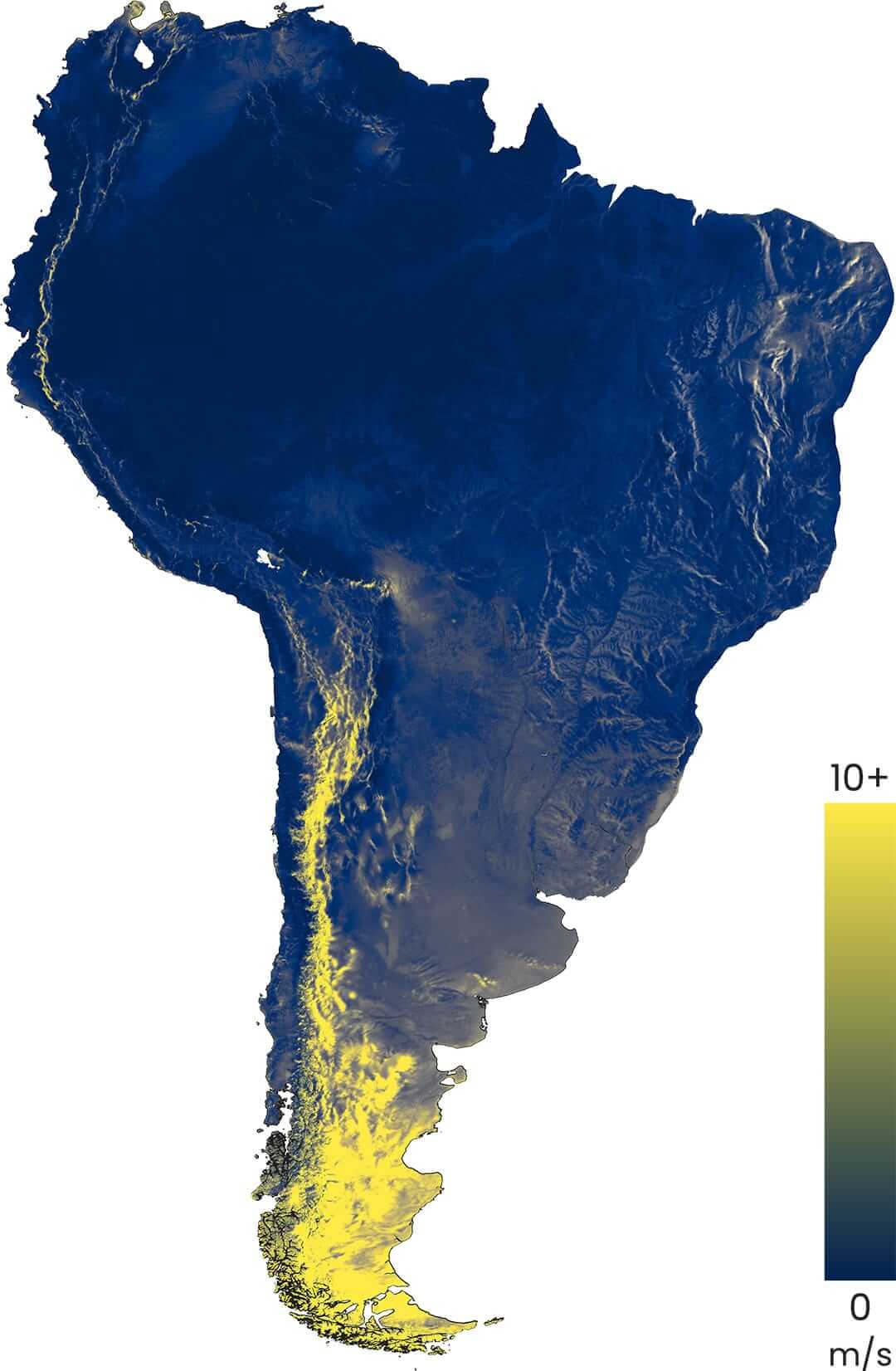
Fig. 1 – Global Wind Atlas: wind capacities in South America.
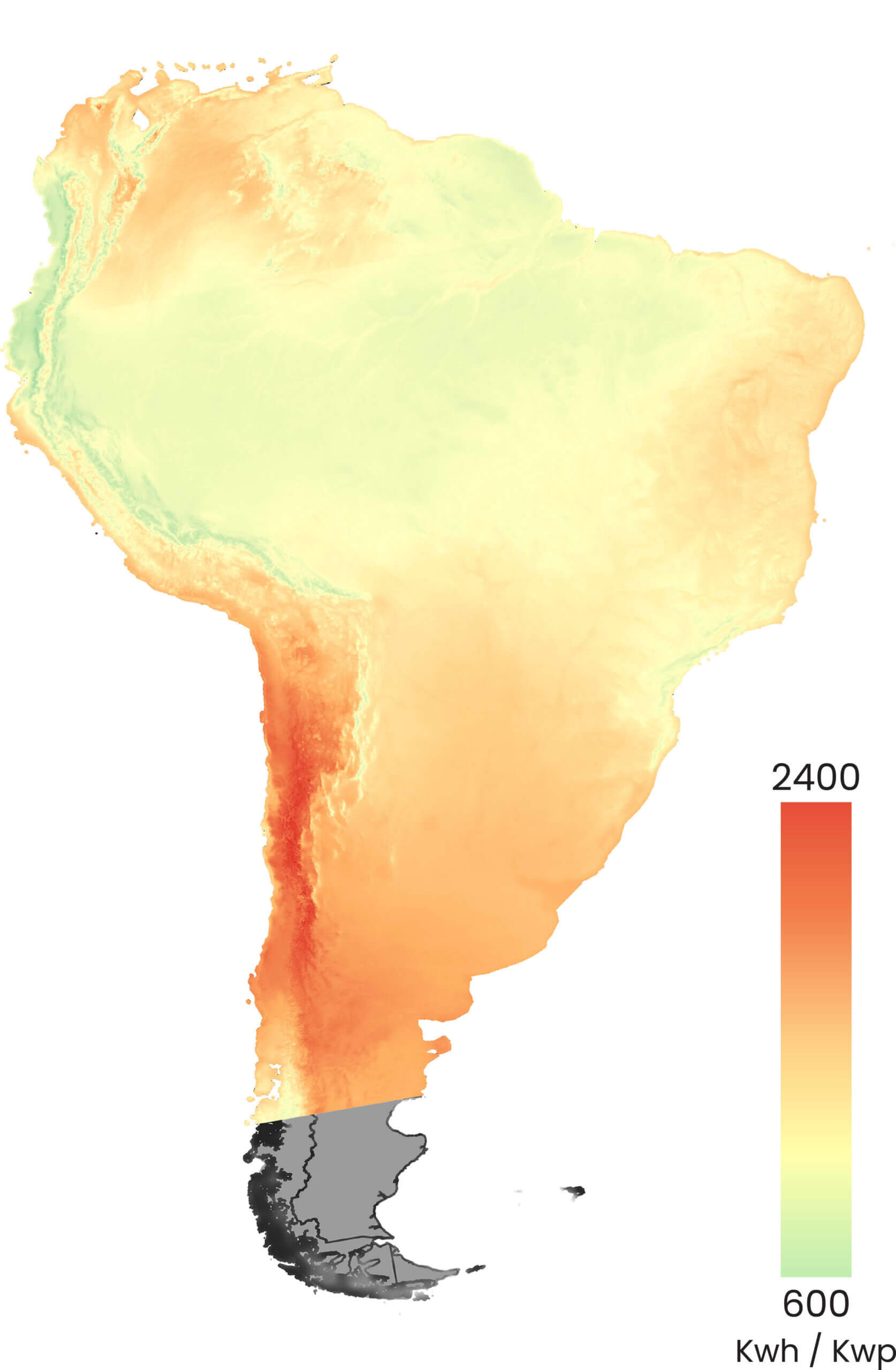
Fig. 2 – Global Solar Atlas: solar capacities in South America.
Similarly, South America’s geography reinforces its strategic relevance in the energy sector. Its access to both the Pacific and Atlantic Oceans positions it as a future energy corridor linking exports of renewable energy, critical minerals and supply chains with Asia, North America and Europe. This dual connectivity, combined with extensive port and commercial infrastructure, gives the region a logistical advantage as new low-carbon trade routes take shape, particularly in a context of growing geopolitical instability affecting major global maritime corridors. The Amazon basin, in turn, remains a global climate stabilizer and a key case for balancing development and conservation in a decarbonizing world.
With approximately 440 million inhabitants, South America represents both an important energy-consumer market and a testing ground for the clean technologies it seeks to deploy. Its average income profile places affordability, reliability and social equity at the heart of energy transition policy. Consequently, policies that combine decarbonization and economic development are more likely to achieve legitimacy and success.
At the political level, South America remains largely democratic, with the notable exception of Venezuela. The absence of large-scale interstate conflicts and a basic level of stability set the region apart from other resource-producing regions. This relative predictability creates favorable conditions for long-term investment in renewable energy, power grids and critical minerals, conditions that international partners increasingly value as they diversify their supply chains.
Success or failure in managing these assets will not only shape its own development trajectory but will also influence the feasibility and cost of the energy transition on a global scale.
Regional fragmentation: The structural constraint
South America remains significantly behind in terms of economic and political integration. In principle, few regions of comparable size and population share so many elements of cohesion: A common colonial history, mutually intelligible languages such as Spanish and Portuguese, a predominantly Catholic tradition and the absence of large-scale interstate wars since the independence movements of the 19th century.
Intuitively, these factors should have laid the groundwork for solid integration. However, South America has the lowest levels of intraregional trade in the world. Only about 13% of its trade takes place within the region,9 compared to about 60% in the European Union and 40% in Asia. Cross-border infrastructure is equally weak. There are no regional rail networks, air transport is costly and fragmented, and energy interconnections remain limited.10
The recurrent failure and dysfunction of regional integration schemes—from the Andean Pact11 to more recent groupings such as UNASUR12 and CELAC13—reflect chronic discontinuity, shifting political priorities, weak bureaucracies and divergent national models.
In addition to slowing economic development, this fragmentation has direct consequences for South America’s energy transition. In the absence of common standards on tax, environmental protection and domestic‑participation rules, countries compete with each other to attract investment, often under favorable conditions for external actors. The result is a race-to-the-bottom pattern, in which concessions are granted in exchange for short-term capital and collective bargaining power is weakened.
Mercosur, a trade bloc made up of Argentina, Brazil, Paraguay, Uruguay and Bolivia—Venezuela is a member although it has been suspended since 2017 due to the breakdown of the democratic order in the country—stands out as a partial exception14 Despite recurring disputes among its members and limited impact on intraregional trade, it has proven to be more durable than most regional integration efforts. In fact, under the current uncertain geopolitical environment, the bloc has also taken on renewed strategic relevance.
Negotiations for the trade agreement between Mercosur and the European Union began in 1999 and spanned more than two decades, culminating in a political agreement in December 2024. The agreement’s revival was catalyzed by Russia’s war against Ukraine, which exposed Europe’s vulnerabilities in energy and supply chains and led Brussels to diversify its sources, moving away from both Russian hydrocarbons and certain dependencies on China. Therefore, Mercosur’s performance as an integration mechanism—the very rationale behind its creation—has increasingly taken a back seat to its function as a strategic platform for engaging external actors at a moment when global rivalries are reshaping trade and investment patterns.15
Institutional asymmetry further deepens these constraints, as the strength of governance and regulatory institutions varies considerably across the subcontinent. Some countries have well-established regulatory institutions and a strong rule of law, while others rely on discretionary decisions by the executive branch or on opaque negotiating channels. Even within countries, subnational governments can set the tone, with some provinces applying stricter environmental and social standards and others prioritizing speed and flexibility. An unequal institutional environment favors external actors willing to operate through discretionary or opaque mechanisms. A project that would face rigorous scrutiny in one jurisdiction may move forward with limited oversight in another, fragmenting the regional landscape and making it difficult to consolidate common standards.
Fragmentation, paradoxically, is not an obstacle for external actors, but an opportunity. By adapting their strategies to national and subnational contexts, international actors can ensure flexible and direct agreements without facing a unified negotiating position. For South America, the cost is strategic: The region dilutes the value of its resource endowment and weakens its capacity to define the rules of engagement.
China’s model of engagement in South America
From the PRC’s perspective, South America is a strategic supplier of critical minerals, food and energy, and a relevant space to strengthen Beijing’s diplomatic position on Taiwan. Even though the region occupies a peripheral position relative to China’s primary geopolitical focus in East Asia, these overlapping incentives have strengthened its relevance within Chinese foreign policy.
China’s foreign policy is often described as “pragmatic” or “non-ideological,” particularly because Beijing engages with democracies, hybrid regimes, and authoritarian governments without tying its relationships to conventional left-right alignments, or liberal criteria regarding democracy and human rights. China does not lack ideology; rather, its foreign policy is organized around its own ideological framework that structures international relations differently from the conventional political categories employed in the West and Latin America.
That framework is increasingly organized around a division between an “us”—presented as the Global South—and a “them,” associated primarily with the West. Within this narrative, China projects itself as a representative and partner of countries historically marginalized by colonial and post-colonial dynamics. Latin America clearly fits into that “us,” while the United States occupies the place of the main “other” in the hemispheric context.
This ideological framework guides China’s actions in practice. Beijing offers financing, trade and investment with few explicit political conditionalities, avoiding the demands for transparency, governance or institutional reform commonly associated with Western actors and multilateral organizations. At the same time, it promotes its own diplomatic priorities, including the one-China principle, alternative human rights definitions and normative preferences in multilateral forums.
In operational terms, China acts through state banks, construction companies, manufacturing companies, technology firms and provincial governments. Its model favors direct contact with national and subnational elites, which allows it to negotiate projects at multiple levels of government and accelerate decision-making processes. While the first phase of engagement, in the early 21st century, focused mainly on the national level, subnational entry points have gained relevance, particularly in federal countries such as Brazil and Argentina. By establishing agreements with local authorities, Chinese companies and entities can bypass slower national bureaucracies and maintain continuity even amid political volatility in the central government.
In the financial sphere, China’s comparative advantage is difficult to match. Over the past two decades, public policy banks such as China Development Bank and Export-Import Bank of China have provided more than US$120 billion in loans for energy, mining and infrastructure projects16—a figure comparable to the cumulative approvals of the Development Bank of Latin America (CAF) during the 2010s, which averaged between US$9 billion and US$13 billion per year and totaled around US$110–120 billion over the same period17
In practice, Chinese banks have not replaced multilateral institutions such as CAF, the Inter-American Development Bank (IDB) or the International Monetary Fund (IMF). Rather, they have become an additional pillar in the region’s development finance architecture, expanding the availability of long-term capital to governments with persistent infrastructure needs.
Minerals form the next tier of the relationship. Copper, lithium, iron ore and oil support South American exports of natural resources to China and are central to Beijing’s industrial agenda, including “Made in China 2025”18 and the “dual circulation” strategy19 Far from reducing its dependence, China’s drive toward technological self-sufficiency has deepened its dependence on South American inputs. Agreements with companies such as Ganfeng Lithium in Argentina or Jiangxi Copper in Peru illustrate how critical minerals and energy transition are integrated into Beijing’s broader strategic calculus.
Although the first wave of Chinese expansion in the region was dominated by state-owned enterprises, today the private sector has taken on at least equal importance. Its presence closely follows the industrial priorities defined by the Chinese state and extends Beijing’s influence through market mechanisms. The fastest growing companies are those aligned with strategic domestic sectors: Electric mobility, batteries, telecommunications, cloud services, fintech, surveillance and smart city systems.
As the United States and Europe restrict the participation of Chinese suppliers in sensitive technology sectors, South America—which has largely avoided securitizing its relationship with China—is emerging as an attractive destination for the relocation of sales, services and digital infrastructure. The result is a gradual integration of Chinese technology ecosystems in the region, from electric vehicles and batteries to networks, data platforms and digital services. This trend can generate gains in connectivity and investment, but also reinforce long-term dependencies on Chinese standards, suppliers, and technology architectures20
At the diplomatic level, the Chinese approach to Latin America remains strongly bilateral. Although the China-CELAC Forum provides a regional platform, it functions primarily as a consultative and declarative mechanism, without operational capacity comparable to that of a robust regional institution. In practice, most relevant agreements are negotiated directly with national governments, subnational authorities, political parties and elites. This approach allows Beijing to take advantage of the lack of coordination in Latin America and tailor its ties to the preferences of each government. On the other hand, it also exposes Chinese projects to electoral cycles, leadership changes and breaks in administrative continuity.
When it comes to soft power, it plays a more limited role than is usually assumed. While Confucius Institutes, scholarship programs and Chinese state media have a presence in the region, their impact is modest compared to the organic cultural influence of the United States, Europe or even South Korea and Japan. What is most appealing to South American countries is not Chinese culture or its political system, but its development trajectory.
China’s transformation from an agrarian and poor economy to a global industrial and technological power is a compelling benchmark for public policy makers in South America. Its track record in infrastructure, industrialization and poverty reduction offers a particularly persuasive narrative in a region that, despite levels of economic and social development higher than China’s during the 1960s and 1970s, failed to achieve a comparable structural transformation.
This attraction, however, generates obvious tension. The Chinese model is based on an authoritarian one-party system, while most South American countries are formally organized around democratic and republican frameworks. Even in contexts of democratic backsliding, such as Venezuela, political traditions and social demands oriented toward the restoration or strengthening of democracy persist. Thus, China’s appeal rests less on cultural or political affinities than on its material performance, its state capacity and its promise of accelerated modernization.
The relationship between China and South America is often analyzed through the lens of Latin American dependence on China. The reality is much more complex. As Beijing deepens its technological and industrial transition, its access to critical minerals, energy and food from the region becomes increasingly important. This interdependence does not eliminate existing power asymmetries, but it does give South American countries greater bargaining room than is often acknowledged. The central question is whether the region will be able to turn that strategic relevance into a development agenda of its own.
Notes and sources (20)
- Barrientos, Karina et al., "Energy Transition Pathways and Their Impact on Latin America: A Systematic Review," Energy Reports 12 (2024): 3439–3458. Link↗
- Diario Financiero, "12 de las 20 mayores productoras de cobre del mundo están en Chile y Perú," DF Sud, February 6, 2024. Link↗
- Garip, Patricia "Rare Earth Elements Are Trending. Will They Drive Latin America's Next Mining Boom?," Americas Quarterly, February 26, 2024. Link↗
- Ekbom, Tomas. "Assessments of successes and lessons learned for biofuel deployment: Status of biofuels policies and market deployment in Brazil, Canada, Germany, Sweden and the United States". IEA. (2023). Link↗
- U.S. Energy Information Administration (EIA). "Country Analysis Brief: Venezuela." February (2024). Link↗
- Smith Llinás, Emily. "Riding Brazil's Onshore Wave". AAPG Explorer, October 2023. Link↗
- Zadeh, John. "Guyana's Oil Boom 2025: South America's Newest Petroleum Powerhouse in 2025". Discovery Alert. January (2025). Link↗
- Banyuls, Olivier. "La transición de Argentina a una economía exportadora". DW Español, October 10 (2024). Link↗
- Evenett, Simon et al. "The Return of Industrial Policy in Data", IMF Working Papers 2024, 001 (2024). Link↗
- Brichetti, Juan Pablo et al. "La brecha de infraestructura en América Latina y el Caribe: estimación de las necesidades de inversión hasta 2030 para progresar hacia el cumplimiento de los Objetivos de Desarrollo Sostenible" (2021). Link↗
- Acosta Puertas, Jaime. "La desintegración andina," Nueva Sociedad Vol. 6, No. 3, July-August (2006). Link↗
- Márquez Cabrera, Alejandra. "Fracaso de UNASUR: tres factores explicativos". Revista de Estudios en Seguridad Internacional Vol. 8, no. 2, (2022), pp. 149-168. Link↗
- Argüelles, Carlos Gabriel. "Vigencia de la CELAC en la era de la desglobalización". Foreign Affairs Latinoamérica, April 29, 2025. Link↗
- Botto, Mercedes Isabel. "El Mercosur y sus crisis: análisis de interpretaciones sobre el fracaso de la integración regional sudamericana". Estado & comunes, revista de políticas y problemas públicos Vol. 2, no. 5, July-December (2017). Link↗
- Estevadeordal, Antoni et. Al., "EU-MERCOSUR: ¿plataforma hacia una nueva era de integración transatlántica e intrarregional latinoamericana?". Real Instituto Elcano, 14 January 2025. Link↗
- Inter-American Dialogue and Global Development Policy Center, China-Latin America Finance Databases. Link↗
- Author's calculations based on CAF annual reports (2010–2019). Link↗
- China Watch Institute, "Entendiendo el 'Made in China 2025'," chinawatchinstitute.org. Link↗
- Kippel01, "China avanza en su estrategia 'Made in China 2025'... La estrategia de doble circulación" April 2025. Link↗
- Myers, Margaret. "China's New Playbook in Latin America," Americas Quarterly, Vol. 19, no. 4 (2025): 18–28. Link↗
Finally, we bring together the study's findings to offer an overall interpretation of China's role in South America's energy transition. Building on the evidence presented in the preceding sections, we examine how China's strategy relates to its long-term objectives and draw out the implications for South American countries' public policy. This section closes with recommendations aimed at strengthening governments' capacity to seize the opportunities of the energy transition while preserving their strategic autonomy.
- China’s strategic logic
- What should South America expect?
- Chinese institutions, incentives and actors
- Towards a strategic approach
The empirical analysis presented in this report reveals a consistent pattern in China’s participation in South America’s energy transition. Across the six countries analyzed, Chinese actors systematically concentrate their activity in clearly defined sectors. Far from reflecting isolated investment decisions, this pattern points to a long‑term strategy driven by relatively stable priorities that guide the behavior of Chinese actors abroad.
In the specific case of Latin America and the Caribbean (LAC), these priorities are articulated explicitly in China’s third Policy Paper on LAC, published in December 20251 Within the Chinese political system, this type of document fulfills a role that exceeds the mere expression of intent.. Its main purpose is to communicate the strategic priorities of the Party and to guide the decision-making of different political and economic actors toward those objectives. Although these actors retain some agency in deciding how to pursue those objectives, their room for maneuvering is clearly constrained in advance.2
The evolution of China’s private sector reflects how this model operates. Subsidies, preferential financing and other forms of state support are concentrated in sectors deemed strategic for China’s national development and international presence. It is therefore no coincidence that Chinese companies have secured positions of world leadership in industries such as electric vehicles, batteries and solar panels. It should be noted that the dynamism of these sectors does not reflect an absence of competition; on the contrary, competition among Chinese firms is intense3 What distinguishes this model is that such competition unfolds within an incentive structure that channels private capital toward the sectors defined by the Party, even at the cost of introducing certain distortions into the market.4
China’s Policy Paper for LAC also performs an important outward‑facing function: it presents Beijing’s lines of action through language that resonates with the needs and aspirations of Latin American countries. The document makes no reference to concepts traditionally associated with Western foreign policy, such as democracy, human rights, or institutional reform. Instead, its discourse is structured around infrastructure development, industrialization, energy production, technological innovation, and supply chains. In other words, it is a development “sales pitch”.
This formulation aligns remarkably well with the findings from the fieldwork. Interviews show that, for many of South America’s public and private actors, energy transition is understood less as a climate objective than as an opportunity to promote national development. In this sense, China has crafted an energy-transition discourse that is in tune with the prevailing perception in the region.
Understanding why Beijing structures its relationship with the region in this way requires moving beyond the content of the discourse and examining the political logic that underpins it. This, in turn, demands shifting the focus away from conventional conceptions of national interest and toward the priority that organizes China’s political system: preserving the Chinese Communist Party’s monopoly on power. As former Australian Prime Minister Kevin Rudd points out: “What are the core priorities of Xi Jinping’s administration at home and abroad? They intersect in this institution called the Party. The interest of the Chinese political leadership is for the Party to remain in power. That is the No. 1 priority, the No. 2 priority and the No. 3 priority.”5 From this perspective, many of the policies that Beijing presents as sectoral objectives—from industrial modernization and technological leadership to energy security or decarbonization—take on a different meaning. Rather than ends in themselves, they function as instruments to reinforce the Party’s capacity to sustain its legitimacy and ensure its continuity as a hegemonic actor within the political system.6
This distinction is not merely conceptual. Asking the question “What are China’s interests?” often leads to broad and sometimes ambiguous responses. A more useful analytical framework is asking how a given policy, investment or project contributes to the Chinese Communist Party’s strategic objectives. In the context of the energy transition, for example, the relevant question is not only why China invests in lithium, power grids or electric-vehicle manufacturing, but how these sectors strengthen the Party’s capacity to sustain economic growth, technological leadership and, ultimately, it’s political legitimacy. This shift in perspective makes it possible to interpret more clearly the selection of sectors, the behavior of the different Chinese actors and the priorities that guide their engagement in the region.
Understanding this logic does not imply assuming that China acts as a monolithic actor or that all its projects stem from centralized planning. It means recognizing that, behind the diversity of actors and initiatives, there is a shared political and institutional framework that guides their behavior. For South American countries, adopting this analytical lens makes it possible to understand more precisely the logic underpinning China’s engagement beyond the energy transition and to formulate public‑policy responses better adapted to that reality.
Understanding the foundations of China’s political organization has practical implications that go beyond explaining its international behavior. It also provides a more solid basis for anticipating the overall direction of Beijing’s actions. For South American governments, this means shifting the focus away from individual projects and foreign direct investment toward China’s strategic priorities, which give those projects continuity. Actors, technologies and investment opportunities may change over time; the Party’s strategic priorities will not. Starting from this premise would facilitate designing a long‑term foreign policy toward China, rather than reacting in isolation to each immediate circumstance.
Critical minerals illustrate this logic clearly. For Beijing, resources such as lithium, copper, rare earths, and nickel are strategic inputs for industrial modernization, technological leadership and the strengthening of China’s position within global value chains. Their importance therefore lies in the fact that they simultaneously contribute to long-term economic growth, reduce external vulnerabilities—particularly in relation to the United States—and reinforce the capabilities on which the Party’s competitiveness and legitimacy rests.
The same logic applies to electricity infrastructure. The country‑level analyses in this report show that China’s participation has systematically expanded beyond electricity generation into transmission, distribution and, increasingly, the digitalization of electricity systems. This pattern reflects a strategy aimed at strengthening its presence in infrastructure essential for the expansion of renewable energy, electrification and long‑term energy security. The acquisition of hydroelectric assets in Colombia by Three Gorges Corporation, China Southern Power Grid’s interest in modernizing Ecuador’s transmission network, Huawei’s smart‑grid solutions, the fiber‑optic networks integrated by State Grid into transmission lines in Brazil and Chile, and Goldwind’s wind projects with proprietary control systems in Argentina all constitute distinct expressions of this underlying model.
The research suggests that China’s participation in South America is gradually expanding from extractive activities toward industrial development. Although mining will remain a pillar of the commercial relationship, China’s main comparative advantages are concentrated in industries associated with the energy transition. Electric vehicles, battery manufacturing, photovoltaic technologies, and digital infrastructure form part of an industrial ecosystem that Chinese firms are steadily expanding worldwide. This trend, illustrated in the region by the recent investments by BYD and GWM in Brazil, aligns with the priorities set out in the 2025 Policy Paper.
A more strategic engagement with China depends on understanding Chinese actors in relation to the institutional environment that conditions their behavior. This requires situating those actors in the political context that shapes their incentives, constraints and relations with the CCP.7
In practice, analyses of Chinese actors tend to oscillate between two equally limited interpretations. The first conceives them as mere instruments of the Party-State, assuming that state-owned enterprises operate under direct political instructions from Beijing and that private firms function as simple extensions of the CCP. The second treats them as conventional market actors, comparable to companies operating in open markets under liberal democratic institutions.
The most useful analytical approach lies between the two extremes. Chinese companies compete, seek profitability and make business decisions. However, that autonomy operates within boundaries defined by China’s political system. Economic logic retains some latitude, but it does not override the Party’s political priorities when the two come into conflict.
This is precisely why, in the case of China, the categories of State-owned and private enterprises lose part of their explanatory power. A state-owned firm such as State Grid or China Three Gorges cannot be analyzed as the functional equivalent of Petrobras or Ecopetrol solely because they are all state-owned enterprises. Similarly, a Chinese private company like Huawei cannot be interpreted under the same analytical assumptions as a comparable firm operating under a democratic regime.
Dispute resolution illustrates this difference well. When commercial disputes arise with firms operating in democratic market economies, their counterparts can typically rely on relatively independent judicial systems, corporate governance structures with a greater degree of autonomy, and established mechanisms for dispute resolution
In China, by contrast, the authority exercised by the CCP over the institutions responsible for regulation, oversight, and the administration of justice—together with the close relationship between the Party‑state and firms deemed strategic—means that commercial disputes become intertwined with broader political and diplomatic considerations.
These institutional differences become even more important because the energy transition is no longer confined to energy infrastructure. It increasingly relies on digital infrastructure, intelligent grid‑management systems, data platforms, and other technologies with regulatory and national‑security implications. In this context, understanding the institutional environment in which Chinese actors operate is essential for defining technological standards, governance frameworks, and data‑protection mechanisms that align with states’ strategic interests.
Adopting this analytical framework does not imply that cooperation with Chinese actors should be ruled out. Nor does it prescribe confrontation or disengagement as default political responses. Rather, it applies a basic principle of comparative political analysis: institutions shape behavior. Just as governments routinely take into account differences in legal systems, regulatory traditions, and corporate governance when working with foreign partners, they should also consider the distinctive institutional features of China’s political economy and system of governance. Doing so provides a more realistic basis for assessing risk, negotiating agreements, and formulating long-term development strategies.
The analysis of China’s presence in South America would benefit from a fundamental shift in perspective. Debates on this topic are often framed in terms of false dichotomies: whether the Chinese presence should be welcomed or rejected; whether it represents an opportunity or a source of dependence; whether it poses a risk to national security or not. These approaches are of limited use for policymaking because they are based on overly reductive analytical frameworks. China’s involvement in South America is a structural reality that governments must manage. Moreover, dependence—on China or any other international actor—is not a condition that can simply be avoided, but a structural feature of global production chains and of South America’s historic reliance on foreign technologies, capital and expertise. The relevant question, therefore, is how governments can engage with China in ways that maximize opportunities for national development while minimizing the risks and vulnerabilities arising from that relationship.
First, governments should shift their approach, moving from attracting investment to building value chains. The goal should not be to maximize the volume of Chinese capital entering the region, but to identify components of China’s industrial strategy that can contribute to national capabilities. Policies focused exclusively on foreign direct investment risk reinforcing South America’s traditional role as a supplier of commodities. Conversely, policies that prioritize manufacturing, technology transfer, supplier development, workforce training, and industrial ecosystems are more likely to generate lasting economic benefits.
Second, the relationship with China is usually analyzed almost exclusively through the lens of South America’s vulnerabilities. This approach overlooks the fact that Beijing also faces important structural constraints. China’s development model requires secure access to critical minerals, food, energy, external markets, and reliable trade routes, precisely the areas in which South America holds comparative advantages. As strategic competition with the United States intensifies and restrictions on Chinese technologies and exports widen across the West, South America’s importance to Beijing increases. Consequently, although the relationship remains one of asymmetric interdependence, the evolving international environment tends to strengthen South America’s bargaining position.
Third, the energy transition can no longer be addressed as a sectoral policy. Its scope extends beyond the Ministries of Energy and Environment and requires coordination of industrial policy, foreign policy, and national security. Consequently, managing it requires a whole-of-government approach that aligns these areas around common long-term development goals rather than treating them as isolated sectoral issues.
Fourth, the renewed interest of other advanced economies in South America widens the region’s room for maneuver. The U.S. national security policy published in late 2025 explicitly places the Western Hemisphere—and competition with China—among its main strategic priorities. The European Union, for its part, accelerated negotiations on the Mercosur–European Union Agreement in a context marked by growing geopolitical competition and the search for access to strategic resources and critical value chains. Australia offers extensive experience in mining governance and in managing a complex economic relationship with China. Seizing these opportunities can broaden the options available to the region and prevent any external actor from securing a dominant position in sectors strategic to South American development.
Finally, the region’s political fragmentation should not prevent the development of new forms of cooperation. South American governments have historically struggled to sustain ambitious integration initiatives, and there is little reason to expect this pattern to change in the short or medium term. Nevertheless, the absence of effective political coordination does not mean that economic integration dynamics are absent. Companies are already building regional supply chains; universities are collaborating on research; industry associations are exchanging technical knowledge; electricity companies are coordinating cross-border systems; and mining clusters face increasingly similar technological and regulatory challenges. These networks offer a more pragmatic basis for advancing integration mechanisms than recurring attempts to build political blocs without institutions capable of ensuring continuity. In this respect, a bottom-up strategy, focused on developing industrial ecosystems and driven by the private sector, may prove more resilient than schemes led exclusively by governments, precisely because it depends less on electoral cycles and shifts in political direction.
By way of conclusion, this study highlights a fundamental asymmetry. China’s approach toward South America is grounded in relatively stable priorities and in an increasingly deep understanding of each country in the region. In much of South America, by contrast, the relationship with China continues to be managed in a predominantly reactive manner and through analytical frameworks that oversimplify the nature of Chinese actors and the interests that guide their actions. If the region aspires to engage with China on better terms, it must start by designing a strategy of its own and developing the technical and institutional capacities needed to sustain it.
Notes and sources (7)
- Xinhua, "Texto íntegro del Documento sobre la Política de China hacia América Latina y el Caribe," December 10, 2025, Link↗
- Yuen Yuen Ang, "Ambiguity and Clarity in China's Adaptive Policy Communication," The China Quarterly 257 (2024): 20–37, Link↗
- Japan Science and Technology Agency, Policies, Key Industries and Science and Technology Underlying China's Manufacturing Power Strategy, Research Report APRC-FY2022-RR-03 (Tokyo: Japan Science and Technology Agency, 2023), Link↗; Barry Naughton, "The Innovation-Driven Development Strategy, 2015–Present," in The Rise of China's Industrial Policy, 1978 to 2020 (Boulder, CO: Lynne Rienner Publishers, 2021), 69–98.
- Panle Jia Barwick, Myrto Kalouptsidi, and Nahim Bin Zahur, China's Industrial Policy: An Empirical Evaluation, NBER Working Paper No. 26075 (Cambridge, MA: National Bureau of Economic Research, 2019), Link↗
- Kevin Rudd, testimony before the Parliament of the United Kingdom, Link↗
- David Shambaugh, China's Leaders: From Mao to Now (Cambridge: Polity Press, 2021); Elizabeth C. Economy, The Third Revolution: Xi Jinping and the New Chinese State, 2nd ed. (New York: Oxford University Press, 2024).
- Elizabeth C. Economy, The Third Revolution: Xi Jinping and the New Chinese State (New York: Oxford University Press, 2018); David Shambaugh, China's Leaders: From Mao to Now (Cambridge: Polity, 2021); Kjeld Erik Brødsgaard and Kasper Ingeman Beck, "The Party in Chinese Private Business," Journal of Current Chinese Affairs (2026), Link↗; Kun Jiang, Frank M. Song, and Peng Zhou, "How Does the Chinese Communist Party Embrace the Private Sector?," Journal of Comparative Economics 54, no. 1 (2026): 229–247, Link↗
Looking for the full report?
Download the PDF with all chapters and annexes